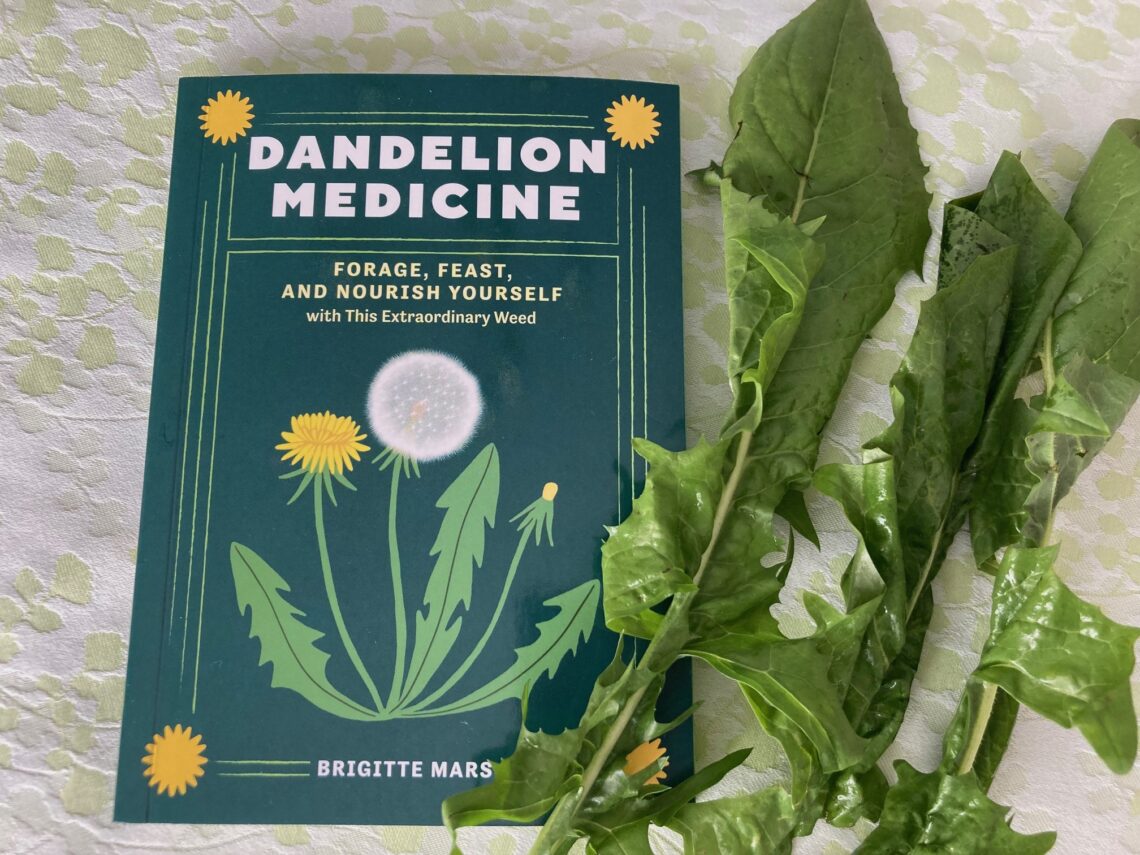
During a gift exchange last Christmas, I received a little book, Dandelion Medicine by Brigitte Mars. The book has chapters on foraging, growing and harvesting dandelions. It also has chapters on the medicinal properties of the plant, recipes for both tea and vegetable dishes.
The dandelions are beginning to bloom in my lawn, but are not suitable for recipes. The book warns that dandelions growing in a lawn that has been treated with weed killer or chemicals any time in the past three years should not be used.
With surprise I found a bundle of dandelion greens, grown in Texas, at my local grocery store. I was delighted! The leaf provides many nutrients. Some of the nutrients are: boron, calcium lactate, folic acid, iron, silica, vitamins A, B, C, and D. In the past week I have added the leaves to our salads and also to pea soup. I look forward to trying recipes in the book.
Here are some interesting quotes.
Dandelion grows where the soil is healthy—it is considered an indicator of the presence of potassium, magnesium, calcium and sodium. p. 32
French seed catalogs from the late 1800s and early 1900s offered as many as five different varieties of dandelion. Given the plant’s versatility, it’s not surprising that dandelion is cultivated and sold in marketplaces in many parts of the world. p.37
Another book, The Natural Healing Handbook, offers the following information about dandelion greens.
Dandelion greens are rich in calcium and vitamin C, key nutrients for supporting bone density. Their anti-inflammatory compounds help ease joint pain and improve flexibility, while antioxidants protect bone and joint tissue from oxidative stress, damage and inflammation. p. 55
While I had these books in hand, I came across dandelion greens in a novel that I was reading. An Untamed Heart by Lauraine Snelling is set in Norway during the 1800s. A group of young people forage for dandelion greens, a healthy addition to their diet.
I have a new respect for the weed that I have tried to banish from our lawn.
Linking this post with Senior Salon Pit Stop .




My dad always made dandelion greens salad. And dandelion wine to.
I appreciate you sharing with Sweet Tea & Friends this month dear friend.
xo
I’ve never tasted or cooked with dandelion greens but I am curious as to their flavor.and would like to try them someday. I like to make soups and I imagine that would be the best way to use them along with some other greens,
My late dad always made dandelion salad with the greens. He always said dandelion is good for the kidneys. He also made tea and wine.
Visiting today from SSPS
Interesting